




What’s the secret to thick, flavorful homemade fruit jams, not soupy?

The Quest for Perfectly Set Homemade Jam
There’s nothing quite like the vibrant taste of homemade fruit jam spread on toast or swirled into yogurt. However, many home cooks face the frustrating challenge of ending up with a delicious but decidedly soupy concoction rather than a thick, luscious preserve. The good news is that the secret to achieving that perfect texture and intense flavor isn’t an arcane art, but rather a science rooted in understanding a few key principles.
Understanding the Power of Pectin
Pectin is nature’s gelling agent, a soluble fiber found in varying amounts in different fruits. It’s the primary ingredient responsible for giving jam its set. Fruits like apples, citrus peels, cranberries, and some plums are naturally high in pectin, making them excellent choices for beginners. Strawberries, raspberries, and cherries, while delicious, are lower in natural pectin and often require a little help.
When making jam, the pectin needs acid and sugar to activate its gelling properties. Without enough natural pectin, you might need to add commercial pectin (either powdered or liquid form) to ensure a proper set. Always follow the manufacturer’s instructions for added pectin, as ratios can vary.

The Acid-Sugar-Fruit Trinity
Beyond pectin, acid and sugar play crucial roles. Acid, often in the form of lemon juice, helps extract pectin from the fruit and lowers the pH, which is essential for pectin’s gelling action. It also brightens the fruit’s flavor and helps prevent crystallization.
Sugar is not just for sweetness; it’s a critical component for setting and preservation. It binds with water, allowing the pectin to form a gel, and acts as a preservative, preventing microbial growth. The traditional ratio often calls for a high amount of sugar, but modern recipes sometimes use less for a fruitier, less sweet jam. Adjusting sugar levels too drastically without compensatory pectin can lead to a softer set.
The Art of Cooking: High Heat, Quick Cook
One of the most common mistakes is cooking jam at too low a temperature or for too long. For a thick, flavorful jam, you want to cook it at a rapid, rolling boil. This quick, high-heat cooking evaporates water efficiently, concentrating the fruit’s flavor and promoting pectin activation without overcooking the fruit or darkening its color. Boiling too gently extends the cooking time, which can break down pectin and result in a weaker set and a duller flavor.
Stir frequently to prevent scorching, but avoid constant, vigorous stirring that can introduce air and hinder the gelling process. Your goal is to reach the setting point as quickly and efficiently as possible.
Mastering the Setting Point
Knowing when your jam is done is perhaps the most critical secret. There are several reliable methods to test for the setting point:
- Temperature Test: Use a candy thermometer. Most jams set around 220°F (104°C) at sea level. Adjust for altitude (subtract 2°F for every 1,000 feet above sea level).
- Cold Plate Test: Place a small plate in the freezer before you start cooking. When you suspect the jam is ready, spoon a small amount onto the cold plate. Let it sit for 30 seconds, then push it with your finger. If it wrinkles, it’s ready.
- Spoon/Sheet Test: Dip a cold metal spoon into the jam, lift it, and tilt. If the jam forms a sheet or drips off in two distinct drops rather than one continuous stream, it’s likely set.
Don’t guess; always use one of these methods to confirm the set. Removing the jam from the heat too early will result in soup, while overcooking can lead to a tough, gummy texture and scorched flavor.
Jarring, Cooling, and Flavor Development
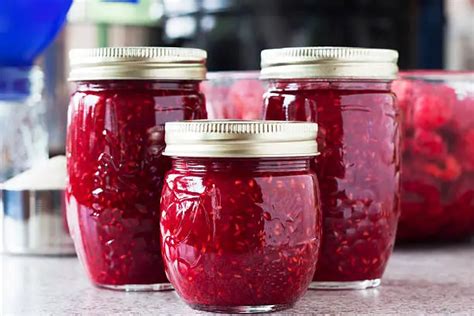
Once your jam reaches the setting point, remove it from the heat immediately. Ladle it into sterilized jars, leaving appropriate headspace, and seal them according to canning instructions if you intend for long-term storage. The jam will continue to set and thicken as it cools. Don’t be alarmed if it still seems a little liquid when hot – the full set develops as it reaches room temperature and then chills.
Allow the jars to cool undisturbed for 12-24 hours. The anticipation is part of the joy! With practice, you’ll develop an intuitive feel for jam making, confidently creating thick, flavorful preserves every time.