



Why does my homemade sourdough bread often turn out dense or sticky?

Decoding the Sourdough Dilemma: Dense and Sticky Loaves
There’s nothing quite like the satisfaction of baking a beautiful, airy sourdough loaf. However, the journey to sourdough perfection can be riddled with challenges, and encountering a dense, gummy, or overly sticky texture is a common frustration for home bakers. This guide will walk you through the most frequent culprits behind these issues and offer solutions to help you achieve that coveted open crumb and delightful chew.
The Health and Activity of Your Starter
Your sourdough starter is the heart of your bread, and its health directly impacts the final product. A weak, underfed, or inactive starter is often the primary reason for dense bread. If your starter isn’t robust enough to produce sufficient carbon dioxide, your dough won’t rise properly.
- Solution: Ensure your starter is consistently fed with a good ratio of flour and water (e.g., 1:1:1 starter:flour:water by weight). Use it when it’s at its peak activity – typically bubbly, doubled in size, and passes the float test (a small spoonful floats in water).

Hydration: A Delicate Balance
Sourdough recipes often call for high hydration, which contributes to an open crumb. However, too much water can make your dough difficult to handle and lead to a sticky, gummy interior, especially if not adequately developed. Conversely, too little water can result in a very dense loaf.
- Solution: Start with a hydration level you’re comfortable with and adjust based on your flour’s absorption capabilities (different flours absorb water differently). If your dough feels excessively wet and hard to manage, slightly reduce the water in your next bake. Conversely, if it’s too stiff, add a touch more.
Gluten Development: The Key to Structure
Gluten is the protein network that traps gases, allowing your bread to rise and giving it structure. Insufficient gluten development leads to a weak dough that can’t hold its shape or gases, resulting in a dense crumb.
- Solution: Practice proper kneading and folding techniques. Autolyse (mixing flour and water and letting it rest before adding starter and salt) can help kickstart gluten development. Utilize stretch and folds during the bulk fermentation to build strength. Your dough should feel elastic and pass the windowpane test (stretch a small piece until it’s thin enough to see through without tearing).

Proofing: Time and Temperature Matter
Both underproofing and overproofing can cause issues. Underproofed bread lacks sufficient gas production, leading to a dense crumb and potential tearing. Overproofed bread, on the other hand, exhausts its gas-holding capacity, resulting in a collapsed structure and a gummy, sometimes sticky texture.
- Solution: Pay close attention to your dough, not just the clock. The ambient temperature significantly affects proofing time. Learn the poke test: gently poke the dough with a floured finger. If it springs back immediately, it’s underproofed. If it leaves a slight indentation that slowly springs back, it’s ready. If the indentation remains, it’s likely overproofed.
![Sourdough Rye Bread Recipe [hearty + rustic] - The Pantry Mama](/images/aHR0cHM6Ly90czMuZXhwbGljaXQuYmluZy5uZXQvdGg/aWQ9T0lQLlBFOC1ZeDlFWkg0ZF9zUS1YWGl1VUFIYUxIJnBpZD0xNS4x.webp)
Baking Environment: Heat and Steam
The initial phase of baking is crucial for oven spring and crust development. If your oven isn’t hot enough or lacks sufficient steam, your crust can set too quickly, restricting expansion and leading to a dense interior. Lack of proper baking can also leave the crumb gummy or sticky.
- Solution: Preheat your oven and baking vessel (Dutch oven, baking steel/stone) thoroughly to a high temperature (often 450-500°F / 232-260°C). Use steam during the first 20-30 minutes of baking (e.g., by baking in a covered Dutch oven or adding water to a tray at the bottom of the oven) to keep the crust pliable. Ensure the bread is fully baked; an internal temperature of 200-210°F (93-99°C) typically indicates doneness.
Conclusion: Practice Makes Perfect
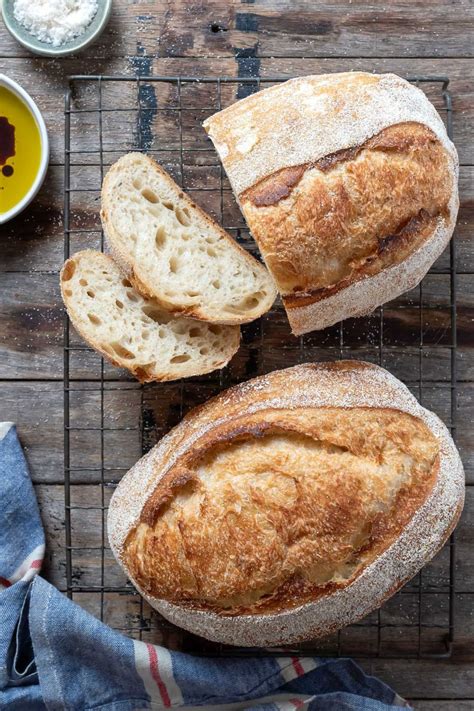
Baking sourdough is a journey of continuous learning and adaptation. By understanding the critical roles of your starter’s health, dough hydration, gluten development, proofing, and baking environment, you can systematically troubleshoot and refine your process. Don’t be discouraged by dense or sticky loaves; each bake offers valuable lessons that bring you closer to achieving that perfectly crusty, airy, and delicious homemade sourdough bread.