Best way to season cast iron for perfect rustic cornbread?

The Secret to Perfect Cornbread Lies in Your Skillet’s Seasoning
There’s nothing quite like a perfectly baked piece of rustic cornbread, boasting a crispy, golden-brown crust and a tender, moist interior. The secret to achieving this culinary dream often lies not just in your recipe, but in the heart of your kitchen: your well-seasoned cast iron skillet. A properly seasoned skillet provides a natural non-stick surface, imparts a unique flavor, and creates the ideal environment for that signature crust.
Why Proper Seasoning is Non-Negotiable for Cornbread
Seasoning isn’t just about preventing rust; it’s about building a layer of polymerized oil that creates a smooth, non-stick surface. For cornbread, this means the batter won’t stick, allowing it to slide out effortlessly and preventing those frustrating crumbled bottoms. Furthermore, a good seasoning ensures even heat distribution, which is vital for baking a uniform, golden crust that provides a delightful textural contrast to the soft interior.
Choosing the Right Oil for Your Cast Iron
While many oils can be used for seasoning, some are better than others due to their smoke point and polymerization properties. Here are some top contenders:
- Flaxseed Oil: Often touted as the best for a strong, durable seasoning due to its high polymerization, though it can be pricey.
- Grapeseed Oil: A great all-around choice with a high smoke point and good polymerization.
- Vegetable Oil/Canola Oil: Readily available and effective, these are excellent workhorse oils for regular seasoning and maintenance.
- Shortening (e.g., Crisco): A traditional favorite that provides a robust, non-stick layer.
Avoid oils with very low smoke points or those that can become gummy, like olive oil, for initial seasoning, though it’s fine for light cooking once the skillet is well-established.
Step-by-Step: Initial Seasoning for a New or Stripped Skillet
If you have a brand-new skillet or one you’ve stripped down to bare metal, follow these steps to build a robust seasoning layer:
- Clean Thoroughly: Wash the skillet with hot, soapy water and a stiff brush to remove any factory wax or residue. Rinse well and dry immediately and completely on the stovetop over low heat to prevent rust.
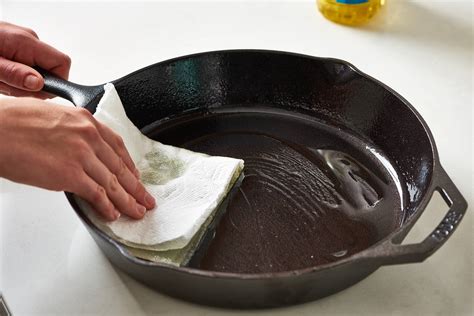
- Apply a Thin Layer of Oil: Once dry and still warm, apply a very thin, even layer of your chosen seasoning oil (e.g., vegetable oil) to every surface of the skillet – inside, outside, and handle. Use a paper towel to wipe off any excess, as if you’re trying to remove it all. You only want an invisible film.
- Bake It On: Place the skillet upside down in a cold oven. Heat the oven to 450-500°F (230-260°C). Once it reaches temperature, bake for one hour.
- Cool and Repeat: Turn off the oven and let the skillet cool completely inside the oven. Once cool, repeat steps 2 and 3 at least 3-4 more times. The more layers, the stronger your seasoning will be.
Maintenance Seasoning for Ongoing Perfection
Even a well-seasoned skillet benefits from ongoing care. After each use, especially if you’ve done a thorough cleaning:
- Clean Gently: Scrape off food residue, wash with hot water and a brush (avoid harsh soap unless absolutely necessary).
- Dry Completely: Place back on a low stovetop burner until bone dry.
- Lightly Oil: While warm, apply a tiny amount of cooking oil to the interior with a paper towel, wiping off any excess.
- Heat Briefly: Heat on the stovetop over medium-low heat for 5-10 minutes until it just starts to smoke, then turn off and let it cool. This helps polymerize that maintenance layer.
Preheating is Key for Rustic Cornbread
Once your skillet is beautifully seasoned, the final step for perfect cornbread is proper preheating. Place your seasoned skillet in the oven while it preheats to your recipe’s temperature (usually around 400-425°F or 200-220°C). A screaming hot skillet ensures that the cornbread batter immediately crisps upon contact, creating that legendary rustic crust. Some even recommend adding a tablespoon or two of oil or bacon grease to the hot skillet before pouring in the batter.

After Baking: Cleaning and Storing Your Skillet
Once your cornbread is out, clean your skillet immediately while it’s still warm. Scrape any stuck-on bits with a flat metal spatula or a plastic scraper. Rinse with hot water, and if needed, use a stiff brush. Avoid abrasive scrubbers. Dry thoroughly on the stovetop over low heat until completely dry. Apply a very light coat of cooking oil before storing in a dry place to prevent rust.

Conclusion
Mastering the art of seasoning your cast iron skillet is an investment that pays dividends in every perfectly crusted, rustic cornbread you bake. With a little care and consistent maintenance, your cast iron will not only last a lifetime but will become an indispensable tool in creating cherished culinary memories.